
What is Hexane
Hexane is an organic compound, a straight-chain alkane with six carbon atoms with the molecular formula C6H14. It is an odorless and colorless liquid, when pure, and it has a boiling point of approximately 69 °C (156 °F). It can be used widely as a relatively safe, largely unreactive, cheap, and easily evaporated non-polar solvent. Hexane is a significant gasoline constituent. The other names of hexane can be given as 1-Hexanol, Amyl Carbinol, 1-Hydroxyhexane, and Hexyl alcohol.
Hexane is a chemical extracted, and further quantities synthesised, from crude oil. It is used in laboratories, primarily when it is mixed with similar chemicals to produce solvents. Common names for these solvents are commercial hexane, mixed hexanes, petroleum ether, and petroleum naphtha.
Hexane is a nonpolar molecule with a weak intermolecular interactions occur between the molecules of pure liquid hydrocarbons.
It is a highly volatile, flammable toxic chemical which is a by-product made from crude oil.
Hexane isomers are to a great extent lifeless, and are every now and again utilized as an organic solvent since they are very non-polar.
Chemical properties
Hexane is highly flammable, and its vapours can be explosive. Heat, sparks, and flames may ignite it. Flammable vapour may spread away from a spill. n-Hexane can react vigorously with oxidising materials such as liquid chlorine, concentrated oxygen, and sodium and calcium hypochlorite. It will attack some forms of plastics, rubber, and coatings. It is incompatible with strong oxidisers.
Applications of Hexane
The major use for solvents containing n-hexane is to extract vegetable oils from crops such as soybeans, flax, peanuts, and safflower seed. They are also used as cleaning agents in the textile, furniture, shoemaking, and printing industries, particularly rotogravure printing. n-hexane is also an ingredient of special glues that are used in the roofing, shoe, and leather industries. n-Hexane is used in binding books, working leather, shaping pills and tablets, canning, manufacturing tires, and making baseballs.
• One of the most commonly used solvents in synthetic reactions using lipases.
• Used in biodiesel production.
• Hexane in commercial grades is used as solvents for varnishes, inks and adhesives.
• Used as a min solvent for vegetable oilseed and other non-petroleum oil extraction since the 1940s.
• Hexane azeotropes have been used for secondary extraction of residual lipids from hexane-extracted meals in order to improve flavour and odour.
Uses of Hexane Industrially
n-hexanes can be used in the formulation of glues for shoes, roofing, and leather products. They can also be used to extract cooking oils (like soy oil or canola oil) from seeds, for degreasing and cleaning a variety of items, and in the manufacturing of textiles. Commonly, in the United States, they are used in food-based soybean oil extraction, and also they are potentially present as contaminants in all those soy food products where the technique can be used; the lack of regulation by the FDA (Food and Drug Administration, the USA) of this contaminant is some controversy matter.One of the typical laboratory hexanes used is to extract grease and oil contaminants from water and soil for analysis. Since the hexane solvent or n-hexane compound cannot be easily deprotonated, it can be used in the laboratory for reactions, involving the stronger bases, like the organolithiums preparation. As an example, typically, butyllithiums are supplied as a n-hexane solution.In general, n-hexanes are used as a non-polar solvent in chromatography. Higher alkanes exist as impurities in n-hexanes that contain the same retention times as that of solvent, which means that the fractions containing hexane also contain these impurities. In the case of preparative chromatography, the large volume of n-hexane concentration can result in a sample, which is appreciably contaminated by alkanes. This can result in a solid compound being obtained as an oil, and the alkanes may interfere with the analysis.
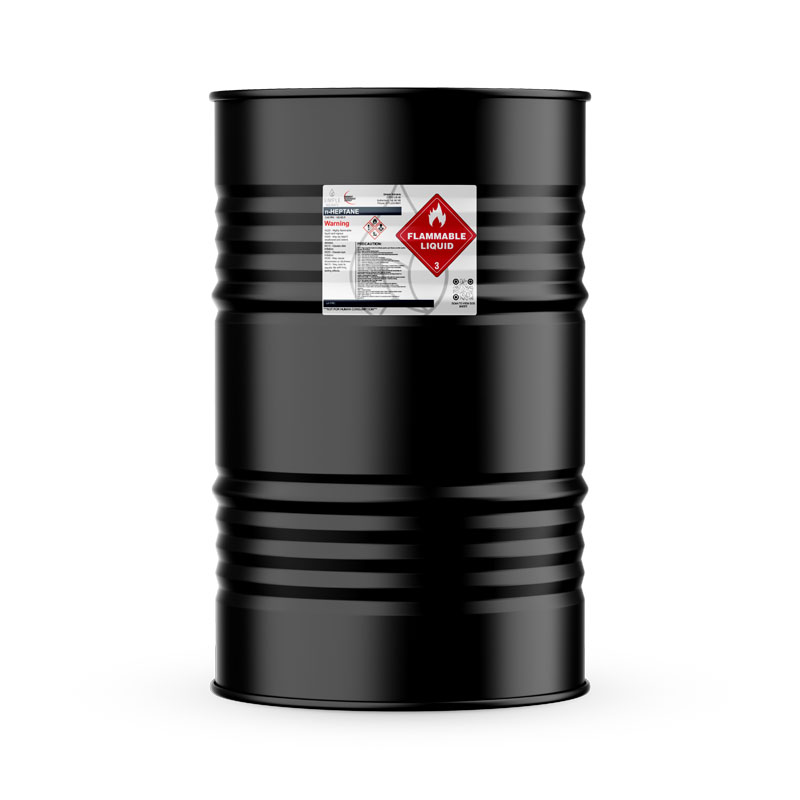
Hazard of Hexane
Hexane is used to extract edible oils from seeds and vegetables, as a special-use solvent, and as a cleaning agent. Acute (short-term) inhalation exposure of humans to high levels of n-hexane causes mild central nervous system (CNS) effects, including dizziness, giddiness, slight nausea, and headache. Chronic (longterm) exposure to n-hexane in air is associated with polyneuropathy in humans, with numbness in the extremities, muscular weakness, blurred vision, headache, and fatigue observed. Neurotoxic effects have also been exhibited in rats. No information is available on the carcinogenic effects of hexane in humans or animals. EPA has classified hexane as a Group D, not classifiable as to human carcinogenicity.
Buy Hexane
Tikochem Group is a sales agent and supplier of all types of Iranian Hexane. Contact us to order, inquire about Hexane prices and purchase Hexane from Iran. We offer a wide range of chemicals and petrochemical available.
We are here to help and answer any questions you might have.
Phone Number: +968 7686 5655 / +98 903 650 8958
WhatsApp & Telegram: +968 7686 5655 / +98 903 650 8958
Email: Info@tikochem.com
Reviews
There are no reviews yet.